Automotive window tinting in Tempe, AZ. Ceramic IR, carbon, and nano-ceramic film for cars, trucks, and SUVs. Serving Tempe, Scottsdale, Chandler, Gilbert, and Mesa. I 3414 S Mill Ave, Tempe, AZ 85282 • Open Monday - Friday 8 am - 5 pm Weekends By Appointment Only
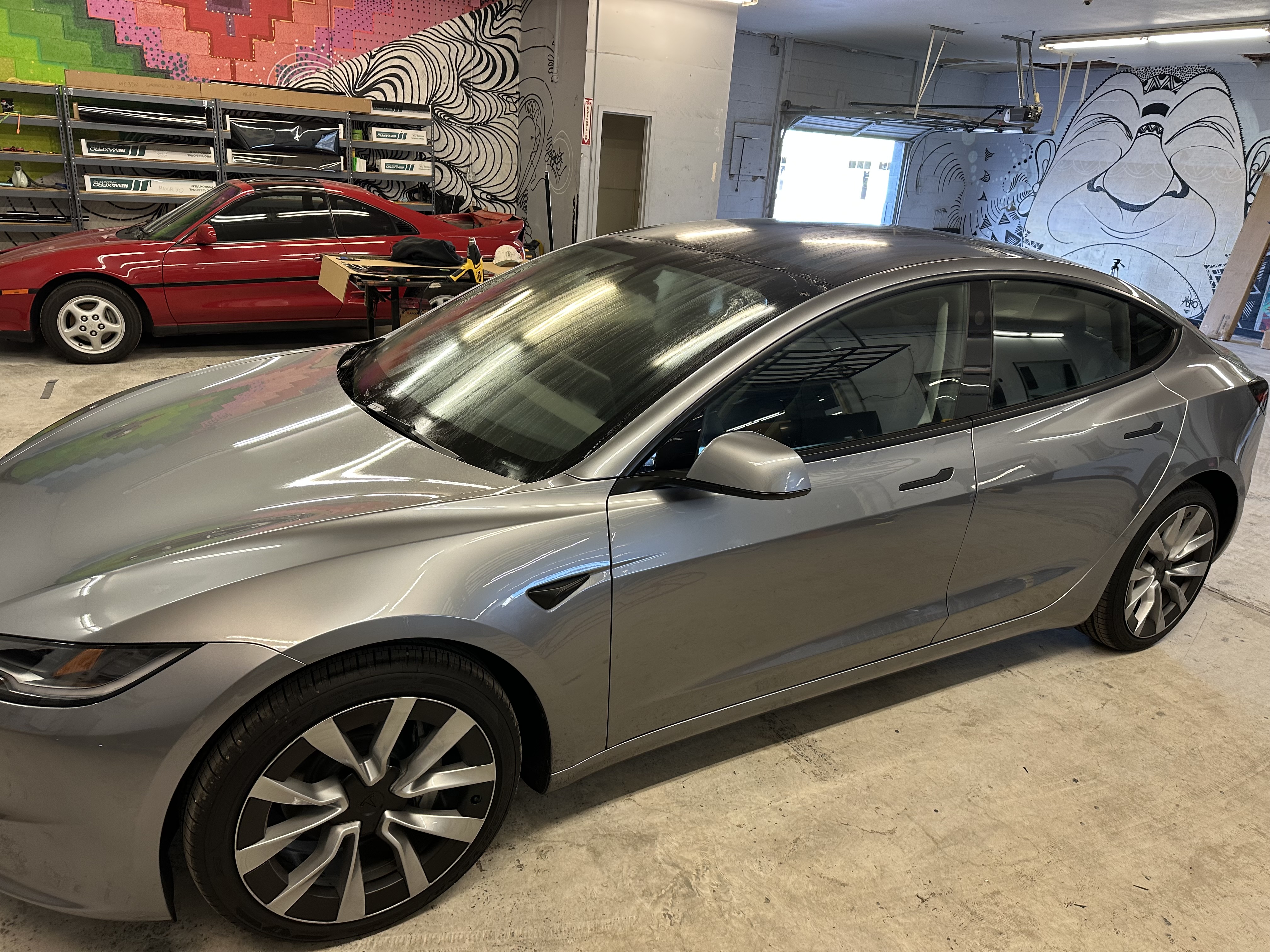
Cooler Cabin. Longer Range. Signal-Safe Tint.
Engineered for Model 3 and Model Y. Nano-ceramic films that cut heat, protect white interiors, and preserve every sensor, camera, and signal.
- Signal-Safe Films
- Lifetime Warranty
- 96% IR Rejection
- Same-Week Availability
Precision-installed, single-sheet rear glass coverage for Model 3 and signal-safe nano-ceramics validated on real Teslas in our bay.
How Ceramic Tint Translates into Real-World EV Range.
Your Tesla constantly balances cabin comfort against battery consumption. High-performance ceramic tint reduces solar energy entering the cabin, which means your HVAC system does less work to maintain the same temperature.
- Up to 96% infrared heat rejection on flagship nano-ceramic films.
- Reduced HVAC compressor duty cycle = less peak current draw from the pack.
- Improved pre-conditioning efficiency when cooling from a hot soak.
- More stable cabin temps, fewer aggressive fan ramps, and quieter operation.
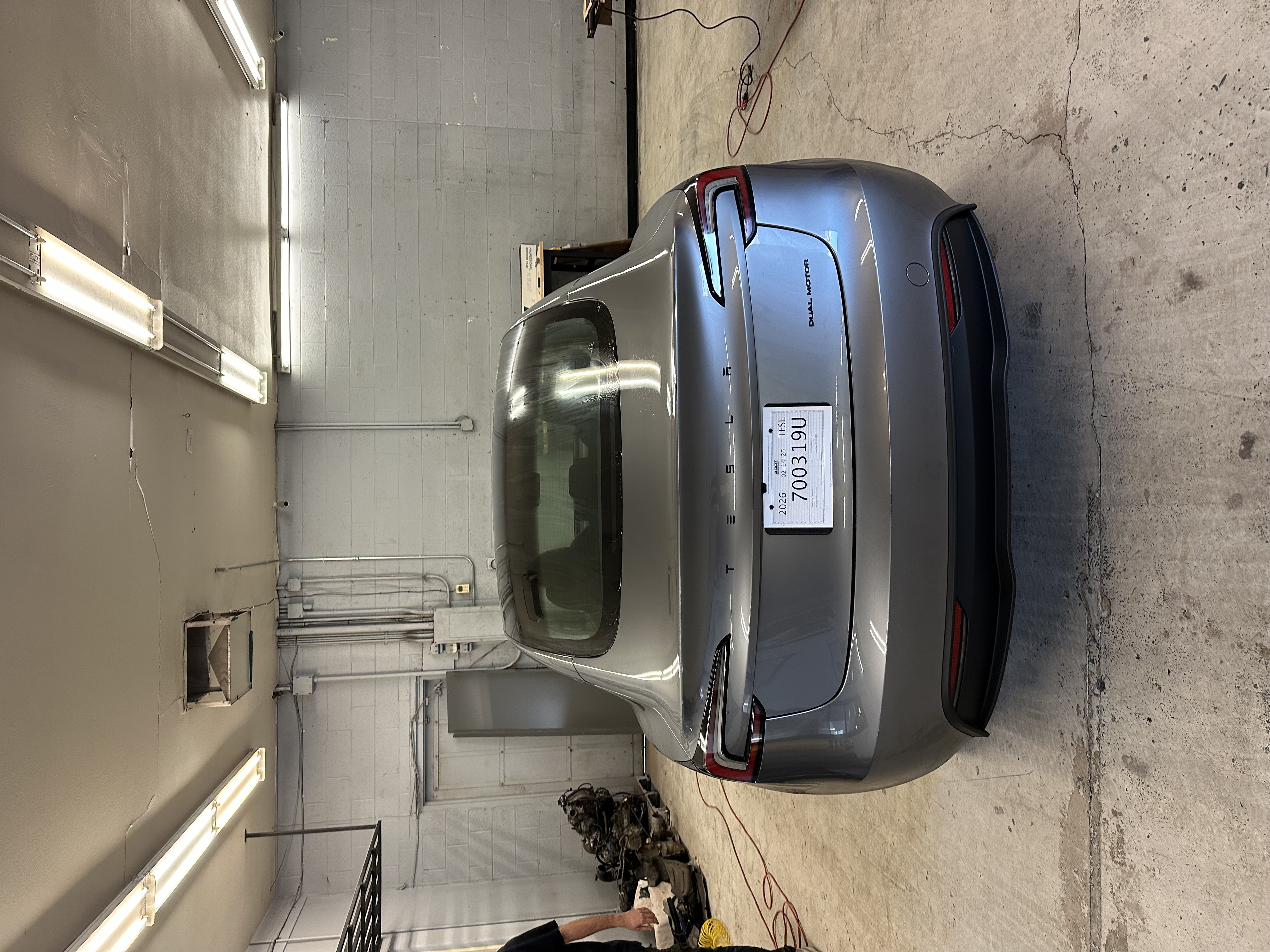
Seamless Coverage for Model 3 & Model Y Glass Roofs.
Teslas are not traditional sedans. The panoramic glass roof and large rear glass require advanced techniques to avoid seams, stress lines, or optical distortion.
Single-Sheet Rear Glass
Model 3 rear glass installed as one continuous piece — no vertical seam line that traps dirt and peels over time.
Thermal Profiled Shrinking
Controlled heat application shaped to Tesla's compound curves. No bubbles, no distortion, no stress cracks in the glass.
Clear Ceramic for Roof
Max light with max IR rejection. Keep the open-glass feel while aggressively blocking infrared heat and UV.
Tesla-Safe Practices
Edge-to-edge coverage that stays within Tesla-approved installation practices. Documented process for every platform.
Zero Interference with Tesla Tech. Full Protection from the Sun.
Teslas are densely packed with antennas and sensors: cellular, Wi-Fi, Bluetooth, GPS, key cards, and more. Metalized tint can degrade or block those signals. Our films are non-metallic, nano-ceramic constructions.
Zero RF Shielding
Non-metallic nano-ceramic particles with no RF side effects.
Phone-as-Key Works
No impact to key cards, Bluetooth devices, or app control.
OTA Updates Safe
Preserves over-the-air connectivity and software updates.
Camera Clarity
Maintains Autopilot camera and sensor performance at all angles.


Defend White Seats from UV Damage.
Tesla's white interior is iconic — and vulnerable. UV and heat accelerate discoloration, glossing, and micro-cracking on seats, dash, and steering surfaces.
- Blocks over 99% of UV to prevent fading and yellowing.
- Significant reduction in dash and steering wheel surface temps.
- More comfortable touch points for kids, pets, and passengers.
- Supports long-term resale value by keeping the cabin visually new.
Request a Tesla-Specific Tint Quote.
Every quote factors in your Tesla model, driving patterns, parking conditions, and aesthetic preferences. Our Expert Advisor will propose a film stack tailored to:
- Model 3 — including single-sheet rear glass options.
- Model Y — optimized for family use and car seat comfort.
- Model S / X — legacy and current platforms.
- Other EVs — Rivian, Lucid, BMW iX, and more.
-
Our recommended film stacks are non-metallic, nano-ceramic constructions that do not interfere with cameras or sensor performance. We do not film over camera lenses, and we verify Autopilot, parking sensors, and cabin monitoring functionality after installation.
-
Arizona allows non-reflective tint on the top 5 inches of the windshield. We can apply a clear or very light nano-ceramic film that delivers IR and UV rejection without compromising visibility or attracting unwanted attention.
-
We recommend a 3–5 day no-roll-down period for side windows and up to 7 days for rear glass. This ensures all moisture escapes and the adhesive fully bonds. Your aftercare instructions will be Tesla-specific and climate-specific.
-
We safely remove existing film using controlled heat and specialized tools to protect Tesla trim, defroster lines, and glass. After inspection, we'll recommend the optimal nano-ceramic stack and any repair steps if prior installations caused damage.
Your Tesla Deserves Better Than Generic Tint.
Signal-safe. Range-extending. Installed by specialists who work on Teslas every day. Book this week — we fill up fast.